
Creating realistic deepfakes is getting easier than ever. Fighting back may take even more AI
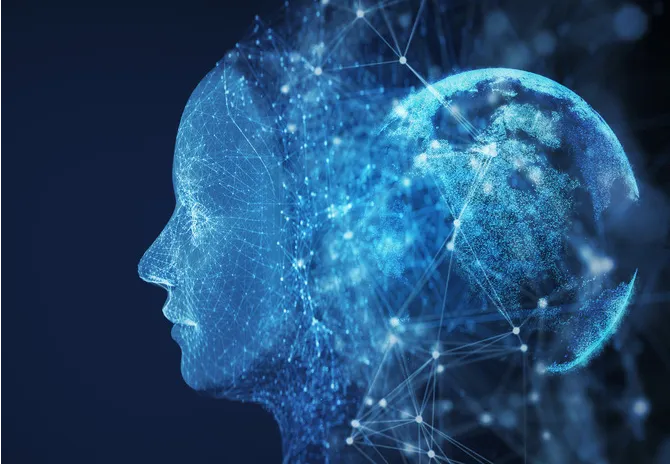
For Washington insiders, seeing and hearing is no longer believing, thanks to a spate of recent incidents involving deepfakes impersonating top officials in President Donald Trump’s administration. Digital fakes are coming for corporate America, too, as criminal gangs and hackers associated with adversaries including North Korea use synthetic video and audio to impersonate CEOs and low-level job candidates to gain access to critical systems or business secrets. Thanks to advances in artificial intelligence, creating realistic deepfakes is easier than ever, causing security problems for governments, businesses and private individuals and making trust the most valuable currency of the digital age. Responding to the challenge will require laws, better digital literacy and technical solutions that fight AI with more AI. “As humans, we are remarkably susceptible to deception,” said Vijay Balasubramaniyan, CEO and founder of the tech firm Pindrop Security. But he believes solutions to the challenge of deepfakes may be within reach: “We are going to fight back.”
DE-CIX Technology Predictions for 2025: The Future of Connectivity and Artificial Intelligence
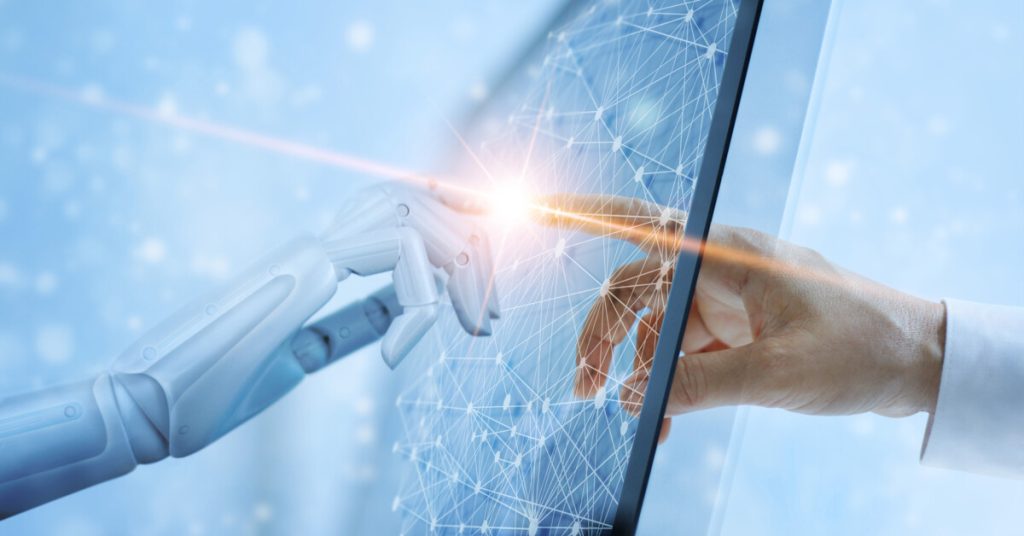
Frankfurt (Germany). From mining on the moon to humanoid robots, DE-CIX experts Ivo Ivanov (CEO) and Dr. Thomas King (CTO) evaluate some of the most exciting trends and the essential interplay with communication technology. Below are 5 trends that will shape the connected business world, the further evolution of technology, and the interconnection business in 2025, the year of DE-CIX’s 30th anniversary. Trend 1: Intelligent economies – No smart value creation without smart networks According to IDC, 80% of CIOs worldwide plan to embrace artificial intelligence (AI) and automation for agility and insights-driven business in the coming years. As AI becomes the core of smart business models on a global scale, it requires equally intelligent IT infrastructures and networks that are as agile and autonomously scalable as the self-managing systems, processes, and workflows within a connected global economy. “Standards, open architectures, and APIs will make tomorrow’s network interoperable and intelligent,” says Dr. Thomas King, CTO at DE-CIX. With 5G Advanced set for global roll-out in 2025, the stage is now being set for the next generation of mobile connectivity. “6G will not only be up to 100 times faster than 5G, but it will also integrate AI to secure, manage, and control networks. This level of intelligence will be needed in all connectivity technologies to manage future AI-driven data flows,” Dr. Thomas King continues. “Smart value creation demands equally smart technologies. AI not only offers support for more intelligent network management, but for operational excellence in all areas of the telecommunications industry,” says Ivo Ivanov, CEO at DE-CIX. “From network optimization to energy efficiency, to fraud detection, and customer service, smart solutions can enhance every single business process.” Trend 2: The Internet space race is heating up Satellites in low earth orbit (LEO) will soon be providing humanity with ubiquitous connectivity, everywhere. This connectivity will even be based on conventional mobile communications standards and can therefore be used with any conventional smartphone. This not only allows dead spots to be closed in connected business models, but also for high-speed, low-latency connections to be guaranteed on the ocean or, for the first time, in every single aircraft seat – as well as enabling connections where this was previously not possible. “Satellite transmission technology offers new hope from space for the billions of people that are disadvantaged today because of limited or non-existent access to the Internet,” says Ivo Ivanov. “That’s why 2025 will see the Internet space race heating up,” adds Dr. Thomas King. “A race that only Internet exchanges can really get going, by exchanging data packets with minimal latency across all interconnected platforms.” Space exploration companies are now also eyeing the multi-billion-dollar potential of mining asteroids and the moon to access, for example, Helium-3 for Quantum computing applications. “Without computing power and connectivity in space and on the lunar surface, none of this will be possible,” says Ivo Ivanov. An opinion that is supported by figures from the World Economic Forum and McKinsey: Both estimate the global space economy will be worth US$1.3 trillion by 2035, up from US$630 billion in 2023. Trend 3: Self-driving cars are entering the mainstream Increasingly autonomous vehicles are expected to hit the roads in 2025, with the first robotaxis using level 4 autonomous driving systems (highly automated, but with the option of human control) now in use in several US cities. Other car makers are planning to launch their level 3 (highly automated driving enabling the driver to take their eyes off the road and engage in secondary activities) and level 4 autonomous driving systems in various countries in 2025. These vehicles are dependent on excellent wireless connectivity – both mobile and satellite – to keep the cars and their passengers safe and provide them with near real-time data. So much so that car companies are even starting to build their own LEO satellite constellations as part of their global networks. “These networks need seamless interconnection to AI clouds, as well as to relevant content and application networks, in the lowest latency,” says Ivo Ivanov. To facilitate the use of AI in various industries, in 2024 DE-CIX introduced – as the first operator worldwide – the concept of the AI Exchange for robust and resilient connectivity to AI clouds and AI as a Service providers. “It’s about performance, security, compliance, and simplicity,” explains Ivanov, “and about allowing AI in action to work its magic.” Trend 4: Humanoid robots to arrive in factories and homes Humanoid robots have taken giant leaps forward since the arrival of generative AI, gaining the ability to communicate with people, learn new skills, and adapt their behavior dynamically. “Along with being able to learn from humans, being able to download new skills from the cloud or share them between different robots will significantly increase the versatility and usability of robots,” says Dr. Thomas King. The global market size for humanoid robots is forecast to reach close to US$10 billion by 2030, with their entry in 2025 into homes and workplaces. Already in 2024, several car manufacturers have tested humanoid robots in their production plants and logistics divisions, and limited commercial availability is anticipated in 2025. Mass availability is envisaged starting around 2026 in the US and Europe, while China is planning a mass roll-out of humanoid robots for 2025. “As the workforce takes the next steps towards a hybrid landscape of humans and machines, the need for responsible AI become increasingly clear,” says Ivanov. Estimates suggest that much as 30% of current work hours could be automated by 2030. “AI will create new roles and free up workers to undertake different challenges. Human specializations will focus more on areas that AI cannot solve, and AI can also support companies to enable their staff to develop new skills and change their roles.” Trend 5: Disaggregated computing enables future AI training The way companies train large language models (LLMs) will soon change. “Whereas huge, centralized data centers were previously needed to be able to quickly process computing loads on parallel clusters, in the future it will
NASA AI Helps Satellites “Think” LikeHumans and Collect Data More Eciently
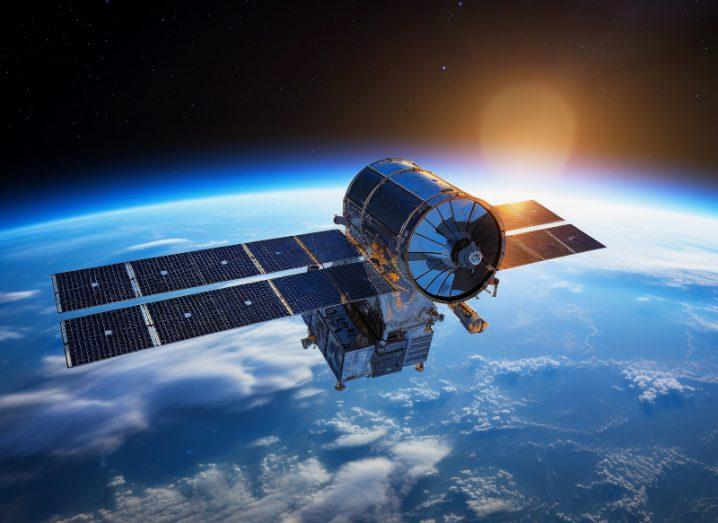
Imagine shopping for a new pair of running shoes online. If each seller described them differently—one calling them “sneakers,” another “trainers,” and someone else “footwear for exercise”—you’d quickly feel lost in a sea of mismatched terminology. Fortunately, most online stores use standardized categories and filters, so you can click through a simple path: Women’s > Shoes > Running Shoes—and quickly find what you need. Now, scale that problem to scientific research. Instead of sneakers, think “aerosol optical depth” or “sea surface temperature.” Instead of a handful of retailers, it is thousands of researchers, instruments, and data providers. Without a common language for describing data, finding relevant Earth science datasets would be like trying to locate a needle in a haystack, blindfolded. That’s why NASA created the Global Change Master Directory (GCMD), a standardized vocabulary that helps scientists tag their datasets in a consistent and searchable way. But as science evolves, so does the challenge of keeping metadata organized and discoverable. To meet that challenge, NASA’s Office of Data Science and Informatics (ODSI) at the agency’s Marshall Space Flight Center (MSFC) in Huntsville, Alabama, developed the GCMD Keyword Recommender (GKR): a smart tool designed to help data providers and curators assign the right keywords, automatically.